The extraordinary poet Stanley Kunitz wrote that the essence of creativity is the erotic spirit, a point he made at age 100. The life force powered by lust—or sorrow at its loss—alone vivifies great work, he said.
Lest anyone take this as a metaphor, he added that poets with low libidos produce second-class verse.
I’ve pondered this idea many times. It’s a gateway to a larger pasture: what are the biological roots of creativity?
There’s no need to argue the details of Kunitz’s assertion about the degree to which the sex drive accounts for great writing. It is an empirical question for which no definitive answer is possible. But it is interesting.
“In rhythm and sound,” he writes, “language has the capacity to transcend reason, it’s all like erotic play. That’s the nature of aesthetic impulse, aesthetic receptivity.”
Please read the rest of it: pages 103-105 in The Wild Braid.
Allied to this provocative contention is the idea that all writing—all art—is based on experiences channeled through our bodies (of which the hormone-addled brain is the most important part). There is nothing else.
On one side is the negative: a writer can’t invent something that does not in some way combine or reconstitute what he or she already knows. There is nothing new.
William Shakespeare, a randy fellow if there ever was one, meditates on this subject in Sonnet 59. Thinking, as always, about his lady, he here considers Ecclesiastes, worrying that such thinking is unoriginal.
If there be nothing new, but that which is
Hath been before, how are our brains beguil’d,
Which, labouring for invention, bear amiss
The second burden of a former child.
But Kunitz takes this point elsewhere, away from the fear of eternal repetition. He instead considers the gift of our bodies to transform our experience. In a cosmos of particles and suns bouncing around like billiard balls, we tell stories.
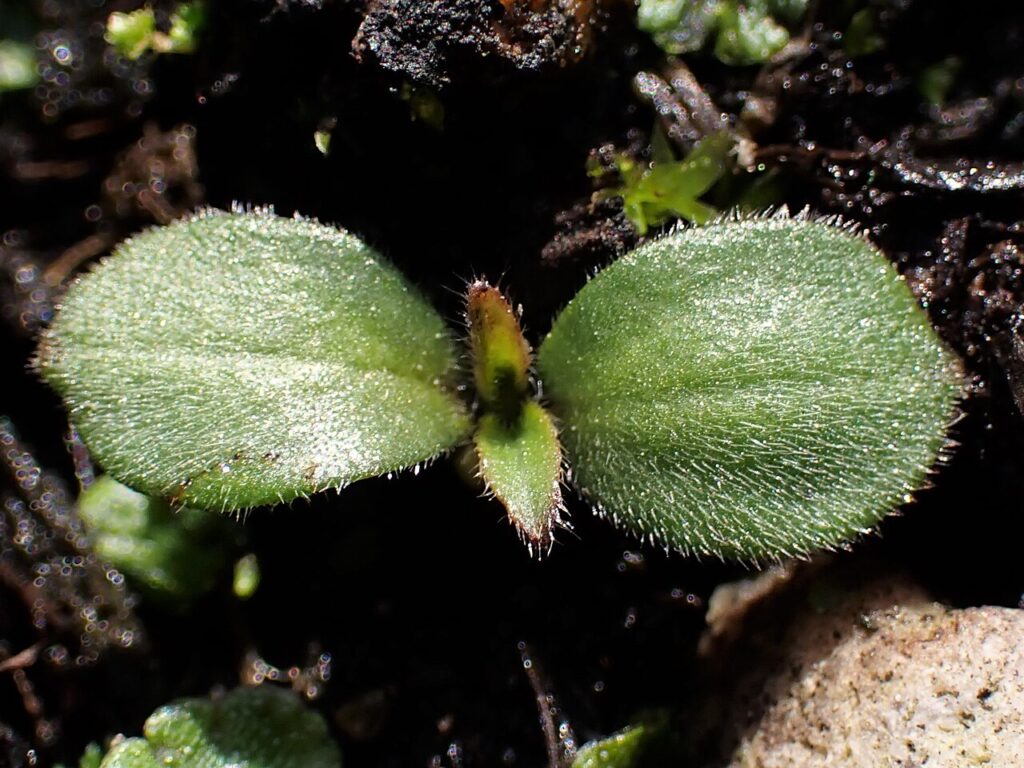
“Creativity is a process of giving meaning to what is on a universal scale meaningless. The plant and the poet and the gardener collect these disparate, disorganized raindrops, sun rays, passing birds, and make something formal.” (Page 102)
We writers don’t have a monopoly on creating meaning. The first words were written in the letters of amino acids. Life itself miraculously authors meaning from randomness. It is created by survival, competition, selection, and birth—by which we write in the language of DNA, which somehow overcomes entropy and produces meaning.
That urge to combine and create, shared with many creatures, does arise from the erotic impulse. But, as Kunitz explains, responsibility comes from that gift, too (don’t I know it, as the father of four!)
“As an artist, you are a representative human being—you have to believe that in order to give your life over to that effort to create something of value. You’re not doing it only to satisfy your own impulses or needs; there is a special imperative. If you solve your problems and speak of them, truly, you are of help to others, that’s all. And it becomes a moral obligation.”
I think that’s right. But it’s hope as well as obligation.
If you enjoy my newsletter, please share it.