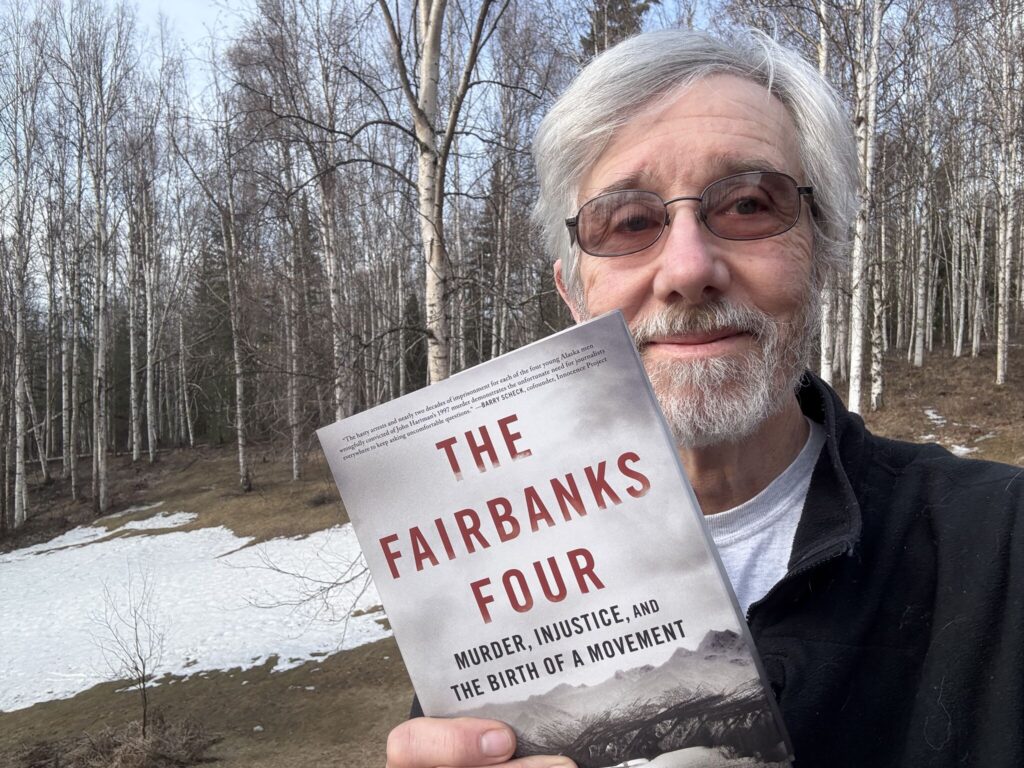
Brian Patrick O’Donoghue spent half his career covering one news story, about four young Alaska Native men convicted of a 1997 murder. In 2015, thanks to his work, they were all released with their innocence proved to the satisfaction of any reasonable person.
A decade later, O’Donoghue published a book to convince the unreasonable people, too. But even that cannot correct a hideous lingering injustice.
The book, The Fairbanks Four: Murder, Injustice, and the Birth of a Movement, is a finely detailed procedural about more than a decade of investigative work.
In 2001, O’Donoghue left the Fairbanks News-Miner and became a journalism professor at the University of Alaska Fairbanks, bringing the story with him. He assigned his students to investigate. The stories they published in the News-Miner brought the attention of pro bono lawyers who finished the job.
For those accustomed to a stereotypical Alaska of snowy adventure, the book is corrective. Urban Alaska is among the most dangerous places in the country, with violent crime two to three times higher than New York City.
The danger peaks in the fall, when the state government hands out free money. One night in October, 1997, young men cruised Fairbanks looking for someone to beat up and rob. They chose teenager John Hartman and stomped him death.
The cops grabbed four Native guys and forced a confession out of one of them, a dead drunk seventeen-year-old. They cultivated an absurdly dubious eyewitness. There was no physical evidence implicating the four.
Convictions followed. One of the Native men had a solid alibi, but it was discounted because those witnesses were Native. A prosecutor told a White jury that Natives stick together.
I’ve done a lot of reporting on bad convictions myself, although I never got anyone out of prison. Other than those with a lot of money or some other special circumstances, police and prosecutors decide who is guilty. The legal system doesn’t work and resists correction.
In the Fairbanks case, O’Donoghue and his students demolished evidence against the four. Real killers confessed. But prosecutors doggedly fought on. In my view, they seem to have defended themselves rather than justice, using their power to push away the truth.
A post-conviction hearing ended just before Christmas in 2015. The judge said he would need more than six months to reach a decision. At that point, prosecutors offered a deal: the men could go home immediately if they signed away their rights, saying the prosecution had been proper.
I consider that extortion. But I understand why the men signed.
The Fairbanks Four ultimately received millions in settlements from the City of Fairbanks. With respect to police misconduct, a judge had refused to enforce the unfair agreement they were forced to sign.
But state prosecutors still contend they did nothing wrong.
That’s the injustice O’Donoghue sought to resolve with his book, finally closing the case. But many publishers turned down the manuscript because it didn’t end with a judicial exoneration.
As journalists, we can only expose injustice, not correct it. O’Donoghue’s book left me angry and cynical.
Note: This newsletter has been corrected. An earlier version misspelled O’Donoghue’s name.
If you enjoy my newsletter, please share it with others. Find other editions here.