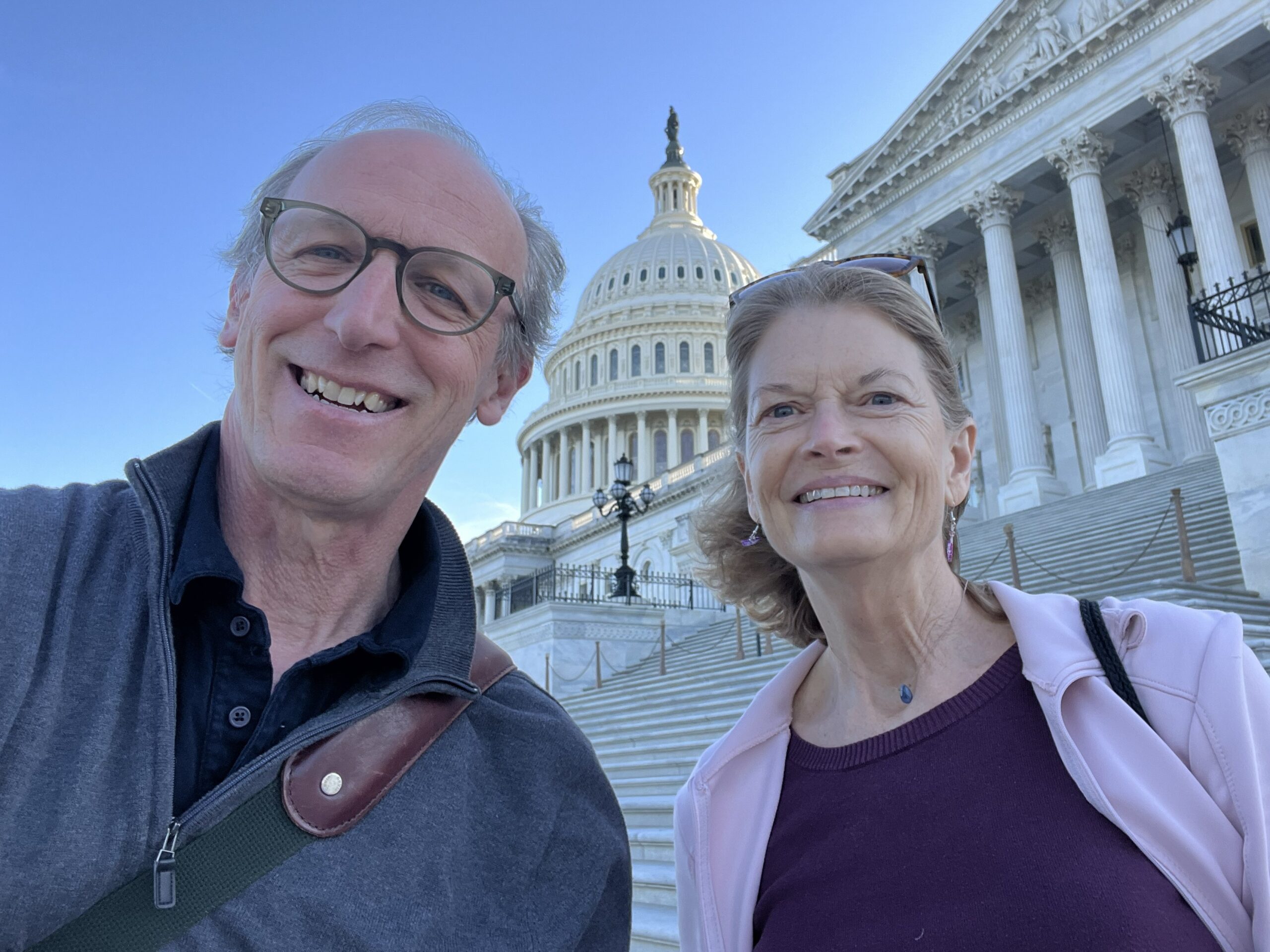
Working with Senator Lisa Murkowski for years on her recent book, I came to know her two ways: through headlines about major events, and in long, private interviews, often a day or two later, when she would tell me how those moments had felt, describe where they happened, and recall the words and images falling on her mind.
Such details are as fragile as crystals of frost on a sunny morning. I’ve learned to record them immediately—either as a witness myself, or with detailed questions—to capture impressions that normally only exist in the moment.
Lisa is not the only client with whom I’ve discovered the great value of contemporaneous interviews. I’ve been working for more than four years with a client whose book may not be written for many years to come. His extraordinary story waits in those transcripts for when the time is right, with twists and turns that otherwise would largely be forgotten.
Collaborating on memoirs often exposes memory’s fallibility and the dulling that comes with time. We lose the piquant details that flavor a good story (and sometimes we invent new ones). Our minds bake the facts to suit our personalities and preferences.
I had a client whose memories often transformed his role to be the hero of his stories. I learned early on to verify everything I could—including first-person recollections—and discovered that some vividly remembered tales simply could not have happened.
In Senator Murkowski’s case, the distortion of memory more often went in the other direction. Long after the fact, she tended to recollect events with reduced emphasis on herself and with lessened drama.
Lisa is not an egotist and prefers attention go to others. That’s an admirable quality in a politician, but an occasionally irritating one for her collaborative writer. More than once, as she toned down the manuscript, I pointed out that the transcripts showed the story on the page was more accurate—and more dramatic—than her memory of it years later.
In the end, her book, Far From Home,combined what she thought when events were happening with how her memory and experience transformed them later. The passage of time often yields deeper truths. Factual precision matters, but it is not what matters most in good storytelling.
As we float down the river of life, learning the pattern of the flow can be more important than mapping each bend and backwater. This is the compromise imposed by aging: wisdom increases, but memory loses vividness and becomes incomplete.
Writers, at best, endeavor to encompass both habits, weaving patterns of wisdom with the immediacy of the present. Rough notes and interviews made in the moment are the essential tool for this.
A transcript or journal can bring back evocative, sensory details from the past. The perspective of time allows you to reinhabit those scenes and understand them.
Great books immerse us in this kind of dual reality, a reality improved beyond the original. This is a reason why literature can teach us more about life than we can learn on our own.
If you enjoy my newsletter, please share it.