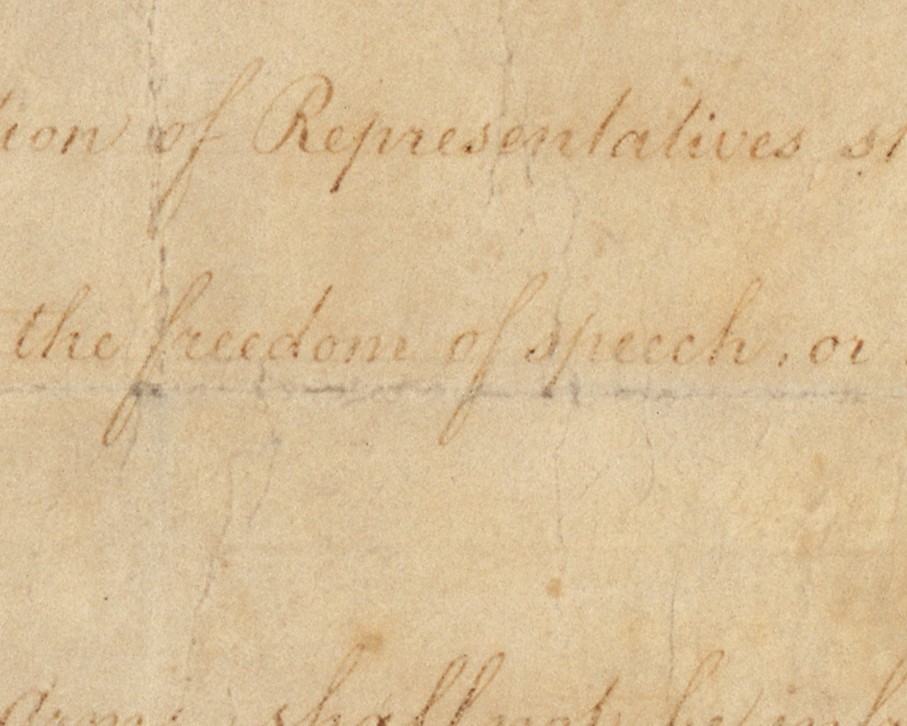
I have always thought of freedom of speech and of the press as individual rights, and as fragile ones at that, since so few of us make use of them. Most Americans almost never say or publish anything the government would object to.
But a recent legal decision changed my mind. While defending journalists’ ability to keep their sources secret, Judge J. Harvie Wilkinson III explained that these rights are part of a system that protects freedom and democracy.
The danger of silencing journalists is profound and reaches far beyond them as individuals.
I’m proud to say Wilkinson is my cousin (my great aunt’s son). He was appointed by President Reagan to the Fourth Circuit Court of Appeals 42 years ago. My father, his elder, described him as a scamp as a boy.
Wilkinson is more conservative than I am, but we both believe in the Constitution, and he has written key decisions during this time when it has been under attack.
In the free speech case, the government investigated journalists to find out who had leaked confidential information to them. Even the name of the publication was confidential in court papers, but reporters have guessed the case is about a New York Times article on a botched special forces operation.
In 2019, a Navy Seal team trying to install eavesdropping equipment in North Korea killed an innocent group of fishermen who surprised them. The mission failed. The Times wrote about it six years later.
The government got a court order for 18 months of the reporters’ LinkedIn metadata. LinkedIn appealed and the case ended up in Wilkinson’s court.
Wilkinson and two other judges ruled the request was too broad. The government had a right to pursue leaks of military secrets, but not to root around in all journalists’ communications.
“Confidentiality of sources is the lifeblood of a free press,” he wrote. “Access to sources inside an agency is essential where the press seeks to ensure public accountability from the often-opaque bureaucracies that today define the executive function. Without confidentiality, the ability to speak is infringed.”
That helps explain why the freedom of speech and the press are collective rights, not only protecting individuals but everyone.
“It is important not to view the value of a free press in isolation,” Wilkinson wrote. “Press freedom is among those things viewed by autocrats worldwide as a threat to their grip on power. Criminal prosecutions freed from partisanship and retribution, a fearless and independent judicial system, and a secure and accessible electoral process all serve to supplement press freedom in distinguishing liberty from oppression. Together these things ensure the human dignity our Constitution intended for Americans.”
At times our nation has seemed trapped in a fever dream. But most of us agree on these truths and value these rights. The first of which are the rights of conscience: religion, speech, press, assembly and petition.
As Wilkinson wrote, “That the First Amendment is First is not mere irrelevance. The Amendment not only enjoys pride of place. It captures both who we are as a people and what we aspire to become.”