Memoirs sometimes show you things the author didn’t intend. A painfully egotistical book is an obvious example. But in the case of a great talent, that unintended insight can be the very thing—insight that transcends the life.
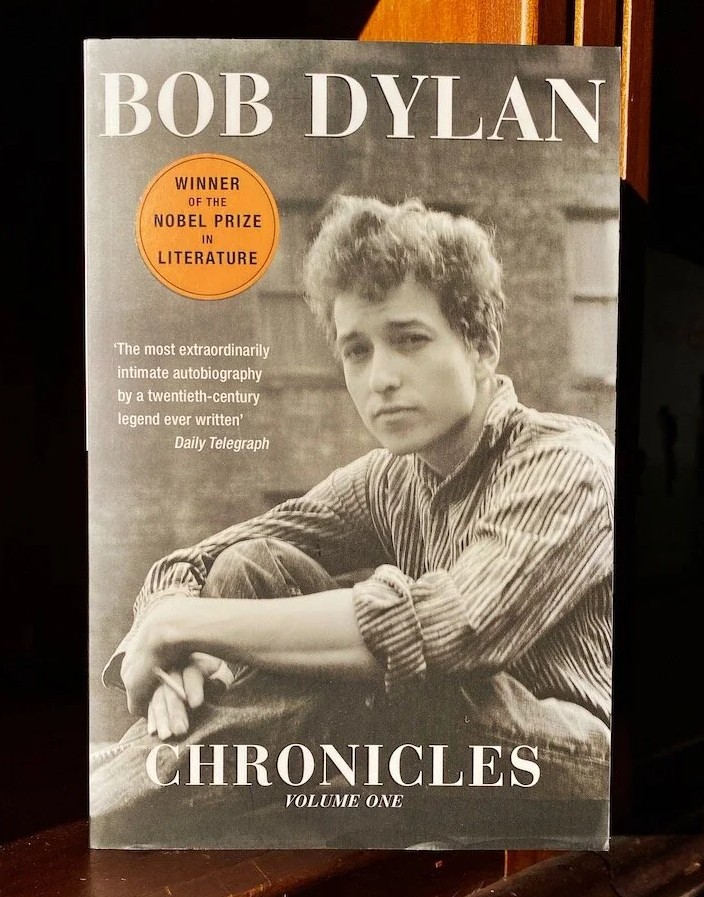
Bob Dylan’s flawed and wonderful book Chronicles, Vol 1, (2004) has that quality. It shows he made great art without fully understanding it.
Dylan’s book is separated into impressionistic sections about different periods of his life. He goes out of chronology and makes little attempt to fill in background when you would expect it, although he usually does manage to drop in all the facts somewhere.
The style is similar to his later songwriting, with its loose associations and word play. But extended into book length, Dylan doesn’t have the opportunity to polish all those jangly parts into the occasional perfection of some of his songs.
The question arises if he knows how to write any other way. But he answered that question at the beginning of his career, with the 1960s albums that were so new and yet so beautifully centered in the traditions of American folk music.
The book is at its best—truly great—talking about Dylan’s early Greenwich Village days, sleeping on couches and playing in tiny coffee houses for tips. He’s soaking in the place, he’s visiting Woody Guthrie in the hospital, he is internalizing these powerful song structures built by generations.
And then the miracle occurs, as he writes age-old songs himself. Eternal songs come from his young fingers and fresh voice. And an even greater miracle: the songs somehow channel the soul of those changing times and capture the rising new culture, making him its chief prophet.
As is well known, Dylan rejected the role of a guru and turned away from the tradition that originally made him great. He sounds petulant about that in the book, but he had a right to choose his own path.
Without the folk song tradition, however, he had a hard time bringing his inspiration down from the clouds and connecting it to anything worthy to give it shape. Sometimes he could do it with a mood or a cause; often not.
Dylan works at the far end of a spectrum, as a gifted writer who can spill out words that as if from a muse, but without discipline. At the other end are those who build traditional structures to make something that can also be beautiful, but without that divinity.
Neither of these sides of creativity is sufficient by itself. We’re able to perceive the divine in our world only when it takes shape. We need stories, places, people—any kind of structure—to make understandable the inspired rantings of our prophets.
And from the disciplined ones, inspiration is likewise necessary. It is the spark that lights the windows in our houses of words and glows in the eyes of the characters we devise.
Dylan’s doesn’t seem to know this about himself. A long section in the end is about a forgotten later record he recorded in New Orleans, and the weeks he spent trying to bring it to life without clear structures or plans, just noodling around trying to capture a mood.
The book itself peters out that way. It can’t hold air on fanciful words alone.
If you enjoy my newsletter, please share it.